AI citation
Being named and being cited are two different wins. Here is how to tell them apart in an answer, and why mixing them inflates your numbers.
By the Surfacedd teamUpdated 3 min readMarkdown
On this page
Short answer
An AI citation is a source link an AI answer engine shows alongside or inside its answer, such as Perplexity's numbered references or the links under a Google AI Overview. A citation is not a mention: your page can be cited in an answer that never names your brand, so track citation rate and visibility separately.
Definition
An AI citation is a link to a web page that an AI answer engine shows as a source for its answer. Perplexity puts numbered citations in every answer that link to the original sources (Perplexity Help Center); Google's AI Overviews and AI Mode show links to supporting websites (Google Search Central); ChatGPT search shows sites surfaced by OpenAI's search crawler (OpenAI, Overview of OpenAI crawlers).
The citation is the AI's receipt: it says "this page informed the answer". It is valuable on its own, because cited pages can earn clicks and because the page shapes what the AI says. But it is a different event from the AI naming your brand.
Named vs cited: the distinction that matters
An answer can relate to your brand in four ways, and only one of them is the full win.
| In the answer text | In the source list | What happened | Counts toward |
|---|---|---|---|
| Your name appears | Your page is listed | Named and cited | Visibility and citation rate |
| Your name appears | Only other sites | Named, not cited | Visibility only |
| Your name is absent | Your page is listed | Cited, not named | Citation rate only |
| Absent | Absent | Not present | Neither |
The third row surprises people. A buyer asks "best CRM for a small team", the engine reads your blog post on pipeline hygiene, lists it as source 4, and then recommends three competitors. Your page was used; your brand was not chosen. If a tool counts that citation as a "mention", your visibility looks better than the answer a buyer actually read.
Surfacedd's rule is explicit: a name or alias in the answer text, or a link to your own domain written inside the answer text, counts as naming you. A URL that appears only in the engine's source metadata counts toward citation metrics, never toward visibility.
The unit: one page in one answer
Citations are counted per page per answer. If the same page is cited in 5 answers, that is 5 citations; if one answer lists two of your pages, that is 2. Two rates follow:
- Citation rate = answers that cite at least one of your pages ÷ all answers.
- Citation share = your cited pages ÷ all cited pages across the answers.
In practice: one answer, read line by line
The sample workspace answer below (fictional brand, Lumen CRM) is a ChatGPT reply to "CRM recommendations for a bootstrapped startup". It names four tools and lists six sources.
| Source | Domain | Owner |
|---|---|---|
| 1 | lumencrm.example | Your site |
| 2 | lumencrm.example | Your site |
| 3 | northwind.example | Competitor |
| 4 | northwind.example | Competitor |
| 5 | reddit.com | Community |
| 6 | a third-party "I tried 7 CRMs" article | Third party |
For this one answer: Lumen CRM is named (first in the list), so it counts toward visibility; 2 of the 6 citations are its own pages, so the answer counts toward citation rate and contributes 2 of 6 to citation share. Northwind CRM also has 2 of 6 citations but was named third. Across a run, you repeat this for every answer and sum the counts.
Now take the same prompt on another day: Lumen CRM's pricing page is cited as source 2, but the answer recommends Northwind and Halcyon only. That answer adds 1 citation to Lumen's count and 0 to its visibility. A tracker that reports only "AI mentions including citations" would show this as a win.
Why you can be read but not cited
Engines also read pages they don't show. Some APIs return the search queries and pages consulted, and a page can be fetched, used and still left out of the final source list. Surfacedd stores these as "read but not cited" where the engine exposes them, which tells you the page is reachable but not persuasive enough to be credited. The guide on where AI answers get their sources covers how each engine picks.
How it shows up in Surfacedd
Every answer opens in a drawer that highlights each brand where it is named and lists the sources with their owner (your site, competitor, Reddit and so on). The Sources views roll these up into the pages and domains AI cites most, and the opportunities list shows pages that cite or name a competitor but not you. That is the job of competitors and sources.
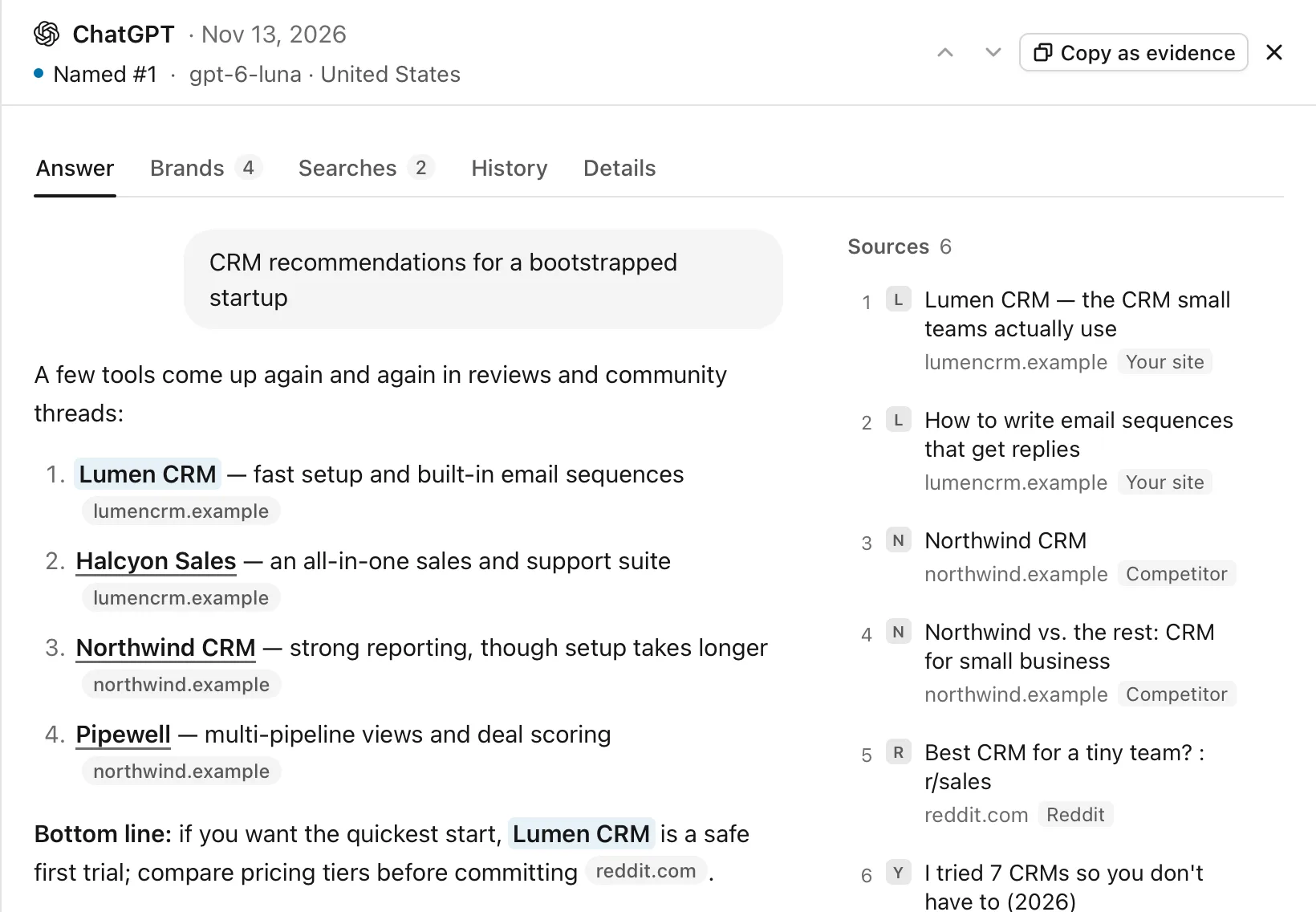
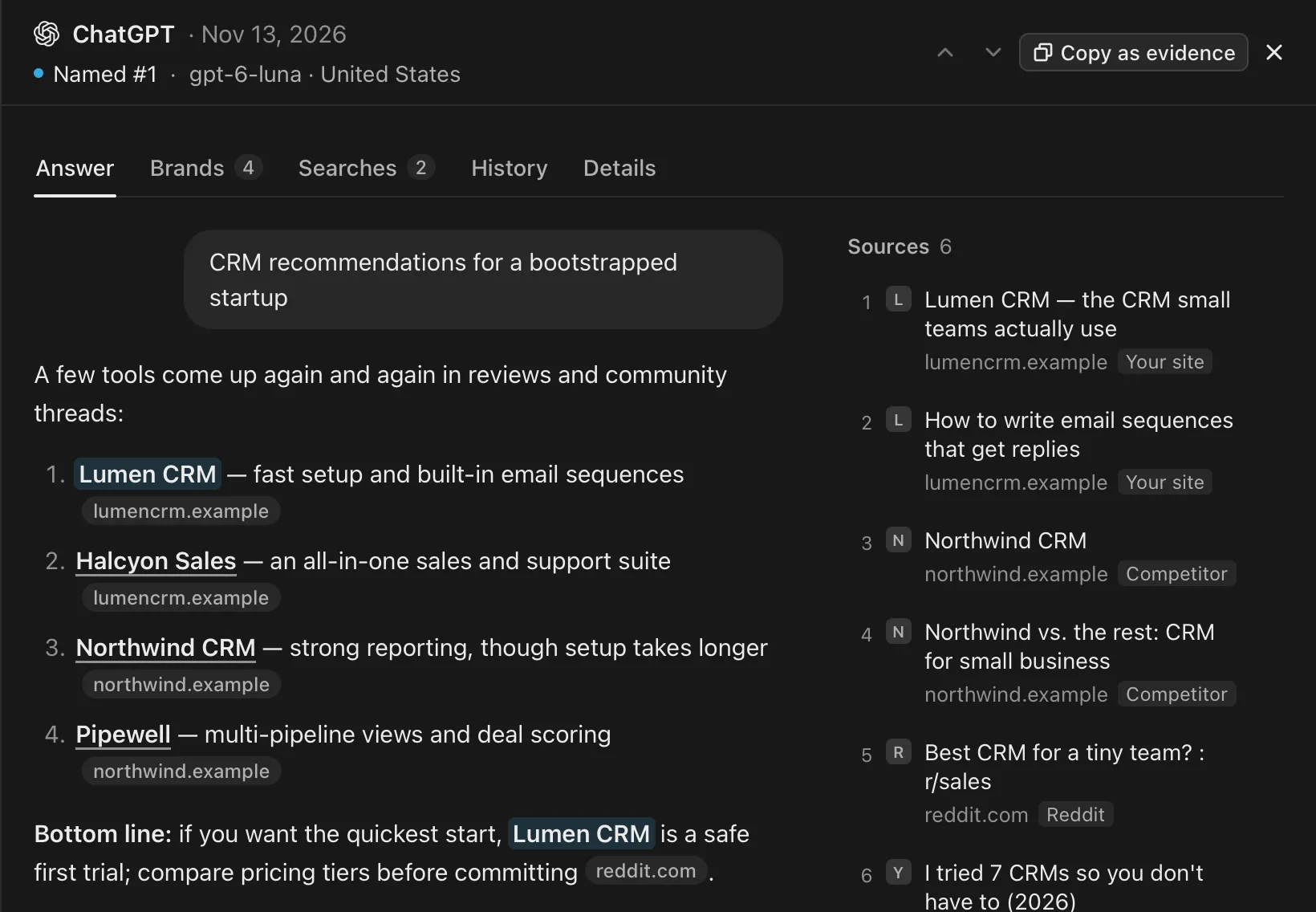
The headline AI visibility score is built from names only; citation rate and share sit beside it on the Overview so you can see both wins.
Related terms
- Citation share: your share of all citations, with the owned-domain rules.
- Grounding: answering from retrieved sources, which is what produces citations.
- Answer engine: the systems that cite sources at all.
- AI hallucination: when an answer states something no cited source supports.
Sources
How we research, write and correct pages: read our editorial policy.